Everything You Should Know About Industrial Epoxy Floors
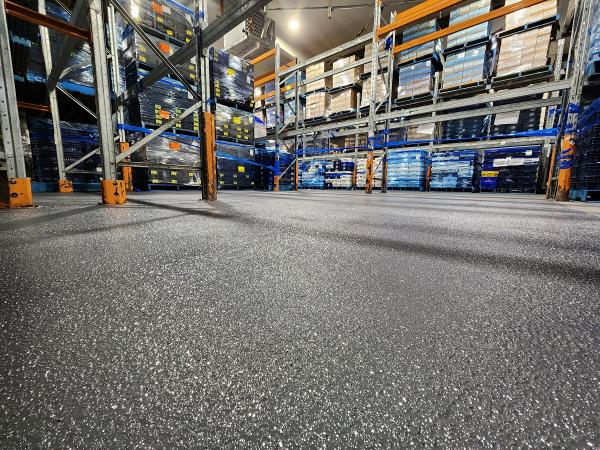
When it comes to building durable, safe, and high-performance flooring for demanding environments, industrial epoxy flooring has become the preferred choice across Sydney and NSW. From warehouses and manufacturing plants to food production facilities, epoxy systems deliver unmatched strength, longevity, and aesthetic appeal, making them one of the most cost-effective flooring solutions available. In this detailed guide, Solidex Finishes, Sydney’s trusted epoxy flooring specialist, explains everything you should know about industrial epoxy floors, including their benefits, applications, types, installation process, and maintenance.
What Is Industrial Epoxy Flooring?
Definition: Industrial epoxy flooring is a resin-based coating system created by mixing epoxy resin with a hardener. When combined, they chemically react to form a tough, seamless, and glossy surface that bonds strongly to concrete.
Purpose: It’s designed to withstand heavy traffic, machinery, chemicals, and impact, making it ideal for industrial facilities such as factories, warehouses, and workshops.
Advantage: Unlike plain concrete, epoxy floors are non-porous and stain-resistant, meaning they don’t absorb oils, grease, or chemicals. They’re also easy to clean, hygienic, and visually appealing, with finishes ranging from matte to high-gloss.
Why Industrial Facilities Choose Epoxy Flooring
Industrial environments demand flooring that can handle constant stress, chemical exposure, and heavy-duty use. Epoxy flooring excels because it combines durability, safety, and professional appearance in one solution.
Key Reasons to Choose Industrial Epoxy Flooring
-
Extreme Durability: Epoxy creates a solid, impact-resistant surface that withstands heavy machinery, forklifts, and high traffic without cracking or peeling.
-
Chemical & Oil Resistance: The coating resists oils, solvents, and chemicals, protecting the concrete underneath from corrosion or damage.
-
Slip-Resistant & Safe: Non-slip additives can be incorporated to improve traction, helping facilities meet Australian safety standards and reduce workplace accidents.
-
Hygienic & Low Maintenance: Its seamless, non-porous surface prevents dirt and bacteria build-up, ensuring cleanliness in food, medical, and industrial settings.
-
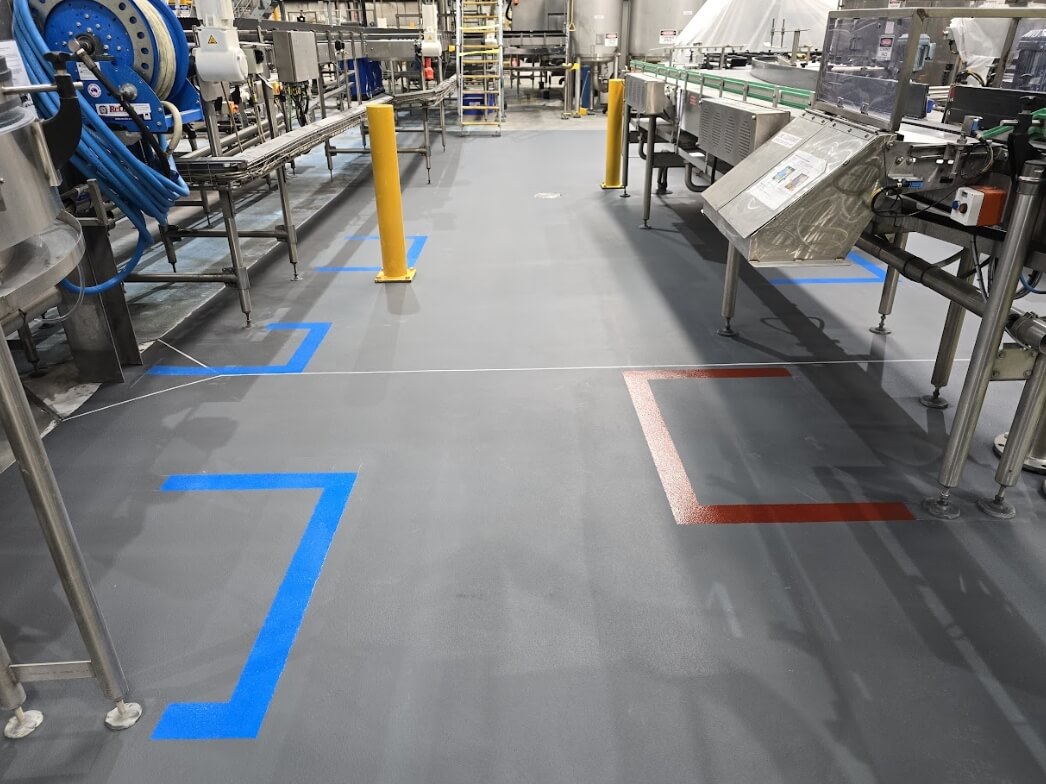
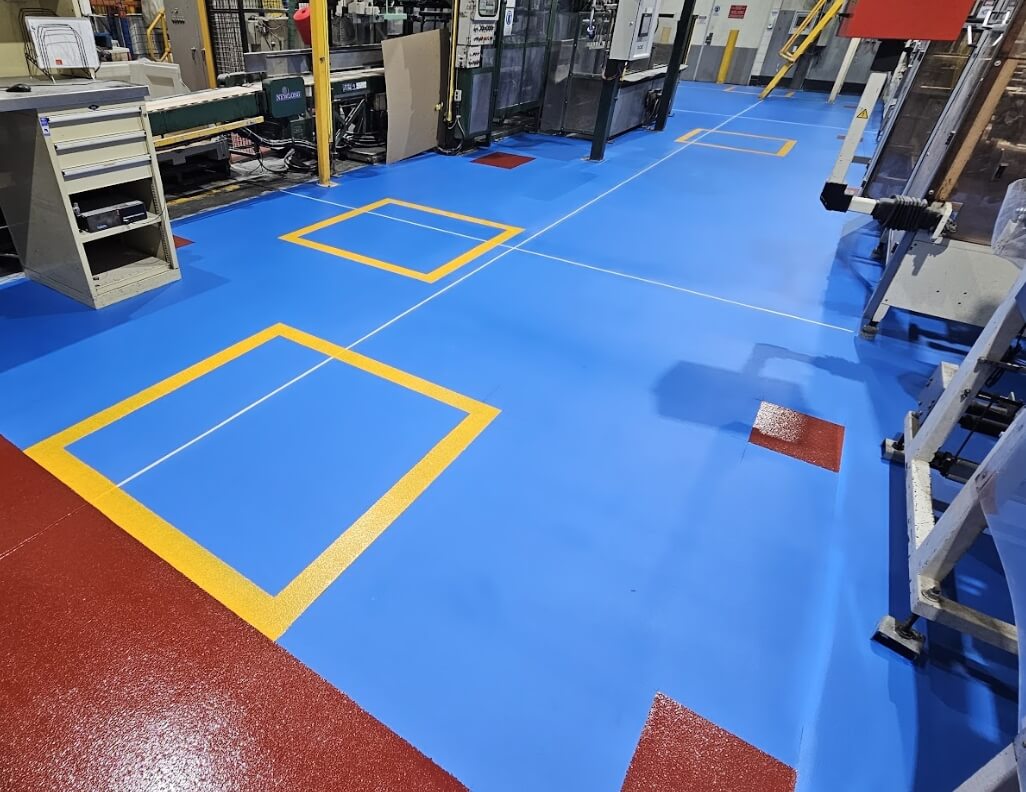
Bright & Professional Look: The glossy finish enhances lighting in large spaces, while color options and line markings can be used for zoning or workflow management.
-
Cost-Effective Over Time: Despite a higher upfront cost, epoxy’s longevity and minimal maintenance requirements make it more affordable in the long run.
Types of Industrial Epoxy Flooring Systems
We provide a comprehensive range of industrial epoxy flooring systems engineered to perform in demanding operational environments. Each system is selected based on site conditions, traffic loads, safety requirements, and long-term performance needs to ensure durability, reliability, and compliance.
-
Self-Leveling Epoxy Flooring: A seamless, high-build epoxy system that creates a smooth, durable surface designed for continuous industrial traffic and equipment movement.
Best for: Manufacturing plants, industrial warehouses, production halls -
High-Build Industrial Epoxy Coating Systems: Multi-layer epoxy coatings applied to protect concrete substrates from abrasion, impact, and long-term mechanical wear.
Best for: Plant rooms, service corridors, storage and utility areas -
Heavy-Duty Epoxy Screed (Epoxy Mortar Systems): Trowel-applied epoxy mortar systems engineered for extreme loads, heavy impact, and high-stress industrial environments.
Best for: Forklift aisles, production lines, heavy manufacturing zones -
Chemical-Resistant Epoxy Flooring Systems: Specialised epoxy systems formulated to withstand exposure to chemicals, fuels, oils, and aggressive industrial cleaning agents.
Best for: Chemical handling areas, battery rooms, processing plants, laboratories -
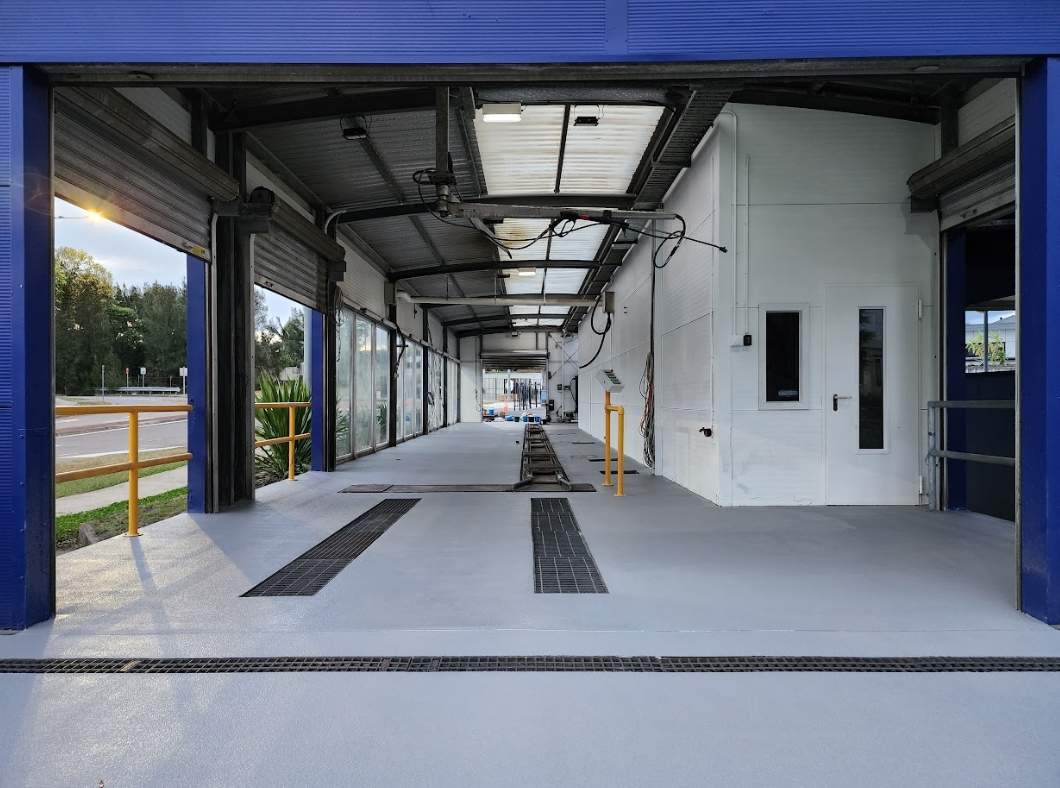
Anti-Slip Industrial Epoxy Flooring: Epoxy systems incorporating slip-resistant aggregates to improve safety in wet, oily, or hazardous conditions.
Best for: Wash bays, ramps, loading docks, wet processing zones -
ESD (Electrostatic Discharge) Epoxy Flooring Systems: Conductive or dissipative epoxy systems designed to control static electricity and safely discharge it to ground.
Best for: Electronics manufacturing, data centres, cleanrooms, controlled production areas -
Hygienic / Seamless Industrial Epoxy Flooring:Smooth, non-porous epoxy flooring designed to support strict hygiene, sanitation, and cleaning requirements.
Best for: Food processing facilities, pharmaceutical manufacturing, clean production areas
-
Moisture-Tolerant Epoxy Flooring Systems: Epoxy systems designed to perform on concrete substrates with elevated moisture levels.
Best for: New slabs, damp concrete floors, moisture-affected industrial areas -
Fast-Cure / Rapid Return-to-Service Epoxy Systems: Quick-curing epoxy systems that minimise downtime and allow facilities to return to operation faster.
Best for: 24/7 operations, shutdown windows, time-critical industrial works
-
Crack-Bridging / Flexible Epoxy Flooring Systems: Modified epoxy systems designed to accommodate minor substrate movement and existing cracks.
Best for: Older slabs, areas with minor structural movement -
Industrial Line Marking & Safety Zoning Systems: High-visibility epoxy or polyurethane coatings used to define traffic lanes, walkways, and safety zones.
Best for: Factories, warehouses, logistics hubs, industrial sites
-
UV-Stable Industrial Epoxy / Hybrid Systems: Industrial-grade epoxy or hybrid systems designed to resist UV exposure and minimise colour degradation.
Best for: Loading dock entrances, external industrial zones, covered outdoor areas
All industrial epoxy flooring systems are professionally specified and installed using proven methods and manufacturer-approved products, delivering consistent quality, safety, and long-term performance you can rely on.
Where Industrial Epoxy Flooring Is Commonly Used
Epoxy flooring’s strength, hygiene, and design flexibility make it ideal across a wide range of industrial and commercial sectors.
-
Warehouses & Distribution Centers: Handle forklifts and heavy goods efficiently without dusting or cracking.
-
Manufacturing Plants: Resist chemical spills, machinery vibrations, and mechanical wear.
-
Food & Beverage Production: Maintain hygiene and meet HACCP and Australian food safety standards.
-
Automotive Workshops: Prevent oil, grease, and chemical staining while maintaining a clean, professional appearance.
-
Pharmaceutical & Healthcare Facilities: Create sterile, seamless surfaces that reduce contamination risks.
-
Cold Storage & Freezers: Remain stable under fluctuating or low temperatures without damage.
How Industrial Epoxy Flooring Is Installed
Installing epoxy flooring requires precision, professional expertise, and high-quality materials. At Solidex Finishes, every installation follows a detailed, results-driven process:
-
Site Assessment & Quotation: The floor is inspected for cracks, moisture, and condition. The right epoxy system is selected based on traffic, environment, and purpose.
-
Surface Preparation: Concrete is ground or shot-blasted to remove dust, oils, or coatings. This creates the perfect surface for strong adhesion.
-
Priming: A primer coat is applied to seal pores and improve bonding between the epoxy and concrete substrate.
-
Epoxy Application: Multiple coats of epoxy resin are applied base, color, and decorative or aggregate layers (if required) — for strength and visual appeal.
-
Topcoat Sealing: A UV-stable epoxy or polyurethane topcoat is added to protect against abrasions, chemicals, and UV exposure.
-
Curing & Quality Inspection: Floors are left to cure for 48–72 hours before use. A final inspection ensures a flawless, long-lasting finish.
Advantages of Professional Installation
Attempting to install epoxy flooring with DIY kits often leads to bubbling, peeling, and poor adhesion. Industrial environments require expert installation for both performance and safety compliance.
Professional installation ensures:
✅ Proper surface grinding and concrete preparation
✅ Accurate epoxy resin and hardener mix ratios
✅ Even application and controlled curing
✅ Compliance with AS/NZS 4586 slip resistance standards
✅ High-quality materials for long-term durability.
With Solidex Finishes, you get more than just flooring, you get a certified system designed for safety, efficiency, and longevity.
How to Maintain Industrial Epoxy Floors
Epoxy floors are low maintenance, but a simple routine will keep them looking new for years.
-
Regular Cleaning: Sweep or vacuum to remove dust and debris.
-
Gentle Mopping: Use warm water and mild detergent, avoid acids or harsh chemicals.
-
Spill Management: Clean spills immediately to prevent surface staining.
-
Protective Mats: Use rubber mats beneath heavy equipment or vehicles.
-
Periodic Recoating: Apply a new topcoat every few years to refresh shine and protection.
-
Longevity: With proper maintenance, industrial epoxy floors can last 10–20 years, depending on usage and environment.
Why Choose Solidex Finishes for Industrial Epoxy Flooring in Sydney
When businesses across Sydney need durable, professional flooring, they turn to Solidex Finishes, a trusted name known for quality workmanship, certified installers, and long-lasting results.
What Makes Us Stand Out
-
Certified Experts: Trained epoxy installers with industrial experience.
-
Premium Materials: We use Australian-made, VOC-compliant epoxy systems.
-
Custom Solutions: Tailored coatings based on your facility’s usage and environment.
-
Safety Compliance: All projects meet Australian standards for slip resistance and workplace safety.
-
Minimal Downtime: Fast project turnaround to keep your operations running smoothly.
-
Guaranteed Results: Durable finishes backed by reliable warranties and aftercare support.
Whether you operate a warehouse, manufacturing plant, or industrial workshop, we design and install epoxy systems built to perform under pressure.
Cost of Industrial Epoxy Flooring in Sydney
The cost of industrial epoxy flooring depends on several factors, including floor size, surface preparation, epoxy type, and finish.
-
Basic epoxy coating: $40–$60 per m²
-
High-build or flake systems: $70–$90 per m²
-
Heavy-duty mortar or chemical-resistant epoxy: $100–$120+ per m²
For accurate pricing, Solidex Finishes provides free on-site inspections and transparent, no-obligation quotes — ensuring you get the best value for your investment.
Final Thoughts
Industrial epoxy flooring is a powerful investment that delivers superior performance, safety, and style. It transforms standard concrete floors into durable, non-slip, and easy-to-maintain surfaces capable of withstanding the toughest conditions. When installed by professionals like Solidex Finishes, epoxy floors not only enhance your workspace’s efficiency but also contribute to a cleaner, brighter, and more productive environment.